












Global IoT Connectivity  •  Remote SIM Provisioning

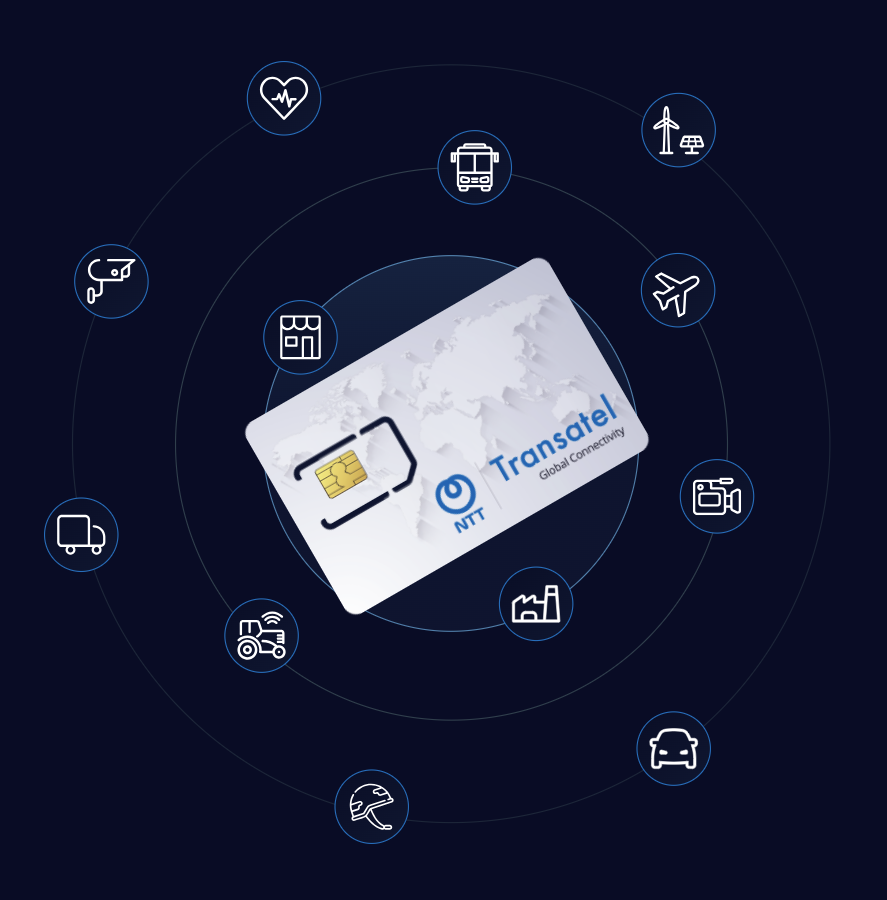
The eUICC SIM and MFF2 eSIM that connect your devices on every network, for their entire life.

Choose your format, keep the same connectivity: plastic card, industrial MFF2 SIM chip soldered onto your PCB, or downloadable eSIM profile. Every one of them carries eUICC, so operator profiles can be changed over the air, across 200+ countries and territories on 2G, 3G, 4G/LTE, 5G and LTE-M. 

11
9
1
2
3
4
5
6
8
7
10
12

THE PROBLEM

Why a fixed-profile SIM card can limit your IoT deployments

Your device ships once and stays in service for a decade. The SIM inside it was designed to be swapped by hand, locked to one operator, and contracted country by country. That mismatch is what breaks deployments at scale, and it is exactly the gap an eUICC SIM is designed to close.

Operator lock-in for the life of the device

With a classic SIM, the operator is fixed the day the device leaves the factory. When rates change, when a 2G or 3G network is switched off, or when quality drops in one market, you have no leverage and no exit that does not involve touching the hardware.
Every SIM change is a logistical nightmare

Sensors in the field, meters on a wall, trackers in sealed enclosures. A removable SIM also means a mechanical connector with exposed contacts, vulnerable to vibration, humidity and corrosion, which fails long before the rest of your device reaches end of life.

Local rules you cannot roam around

Several markets restrict permanent roaming or require a local subscription. Without the ability to load a local profile remotely, each new country means a new contract, a new SIM reference in stock, and a new hardware variant on your production line.

THE SOLUTION

One eUICC SIM, any form factor, one platform

Transatel's eUICC SIM stores and runs multiple operator profiles on a single secure element. It connects on our multi-operator profile from day one, then accepts local or partner profiles over the air whenever your deployment requires it. Available as a standard card or as an industrial MFF2 eSIM chip, with identical connectivity behind both.

eUICC and Remote SIM Provisioning

Transatel's eSIM supports the M2M model (SGP.01/SGP.02), the consumer model (SGP.21/SGP.22) and the IoT model (SGP.31/SGP.32), including the eIM and IPA components that let headless devices with no screen or ca

Multi-network from the first attach

Our default profile gives your devices access to hundreds of public networks. The SIM selects the best available signal among several carriers, so service continues in weak coverage areas, without waiting for a profile change.

Industrial MFF2 eSIM, or any format you need

The MFF2 eSIM withstands vibration, shock, humidity and industrial temperature ranges for the 10 to 15 year service life your deployments demand. Standard 2FF, 3FF and 4FF cards and downloadable profiles are available on the same connectivity.

THE EDGE

Unrivaled data protection with network native security & PRC Trust framework

Protection

  • AI Anomaly Detection

  • Private APN

  • TLS 1.2

Resilience

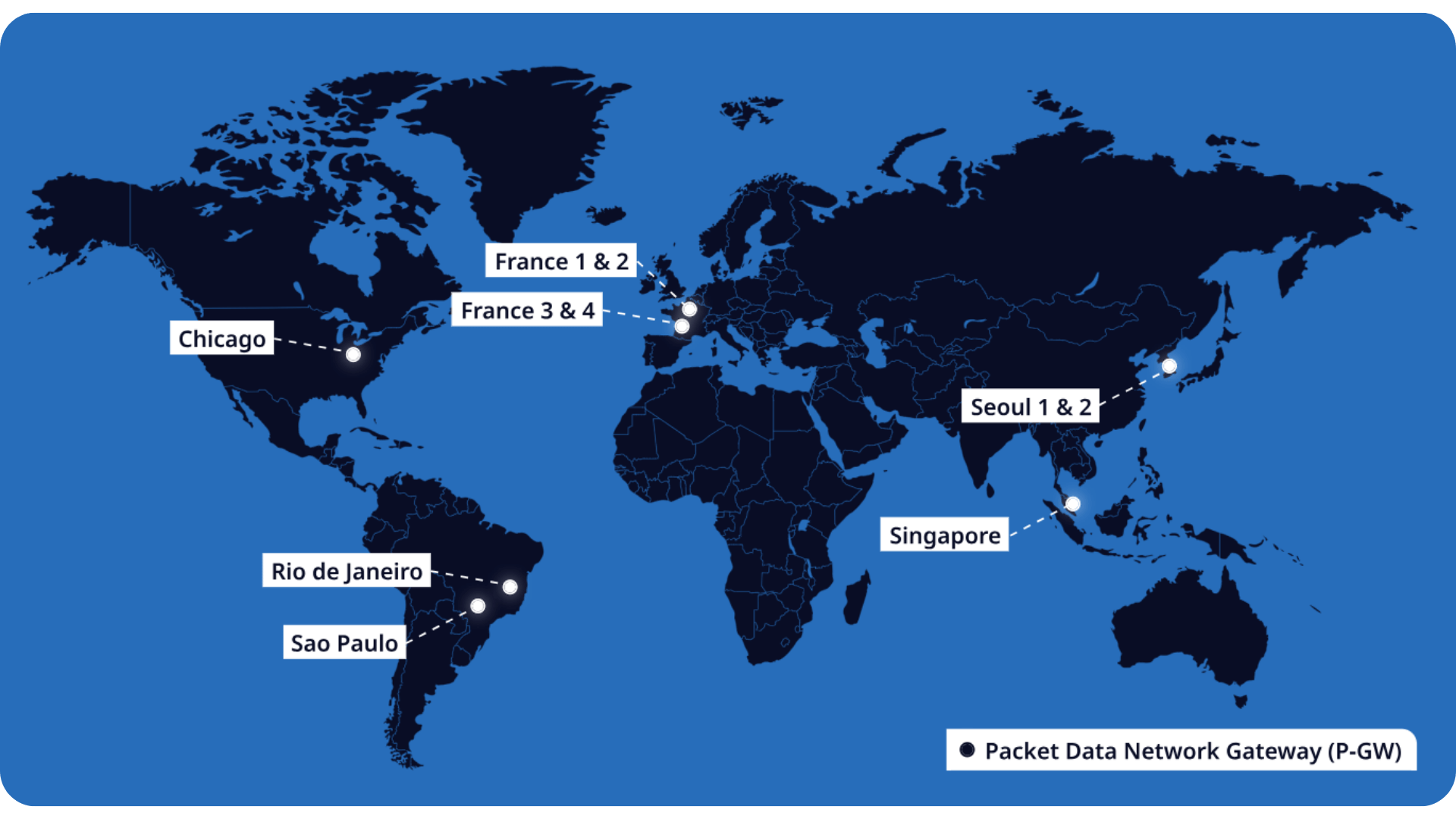
  • Regional network edges

  • Network redundancy​

  • Core infrastructure redundancy

Control

  • Local regulation compliance​

  • NOC & SOC teams​

  • Dedicated network infrastructure

6 Continents.
200+ countries & territories.
One true global coverage.

  • Hundreds of roaming partnerships behind a single eUICC SIM profile
  • Seamless multi-network switch
  • Full regulatory compliance

Tested. Trusted. Tomorrow-ready.

Will your IoT project be our next success story?

QUOTE & ADVICE

Tell us about
your IoT project

A global connectivity expert will get back to you with a proposal tailored to your volumes, countries, and devices.

🗸 Coverage assessment for your deployment areas
🗸 eUICC, MFF2 and module compatibility check for your devices
🗸 Transparent pricing, no commitment, decreasing with volume
🗸 Test SIMs and MFF2 samples to validate before production

FAQs

Frequently asked questions about
eUICC & MFF2 SIMs

What is an eUICC SIM?

An eUICC (embedded Universal Integrated Circuit Card) is a SIM that can securely store several operator profiles and switch between them remotely, using GSMA Remote SIM Provisioning. A classic SIM is tied to one operator and has to be physically replaced to change network. An eUICC SIM does the same job over the air, which is why it suits devices that are sealed, remote, or expected to run for a decade.

What is the difference between eUICC, eSIM and MFF2?

eUICC is the capability, eSIM is the everyday name for it, and MFF2 is one of the physical packages it comes in. Any format can carry eUICC: 2FF, 3FF, 4FF, MFF2 or iSIM. So a plastic triple-cut card can be an eUICC SIM, and a soldered MFF2 chip can be one too. What matters for your project is whether the SIM supports remote profile management, not its shape.

What is an MFF2 SIM?

(Machine Form Factor 2) is the standard solderable SIM package for machine to machine devices, roughly 5 x 6 mm with 8 pins, defined by ETSI. Instead of sitting in a tray, it is soldered directly onto the printed circuit board during manufacturing and becomes a permanent part of the hardware, with no slot and no physical access once deployed. That removes the connector as a failure point in vehicles, outdoor cabinets and machinery.

Can I still change operator once the MFF2 eSIM is soldered?

Yes, and that is precisely why our MFF2 chips carry eUICC. Profiles are managed over the air through GSMA Remote SIM Provisioning, using the M2M model (SGP.02) or the IoT model (SGP.31/32) with its eIM and IPA components for devices that have no user interface. Soldering the SIM removes the tray, not your freedom to change network.

Will these SIMs work with my devices and modules?

In most cases yes. We work with all major eUICC vendors and are agnostic on mobile operators, through existing roaming integrations or local profiles. MFF2 is supported by all mainstream cellular modules, so integration is usually a question of footprint and reflow profile rather than compatibility. Send us your module references and we will confirm, then supply test SIMs or samples so you can validate attach, data session and profile download on your own hardware.