












Global IoT Connectivity  •  eSIM for IoT & M2M devices

One eSIM for IoT and M2M devices, cellular connectivity in 200+ countries & territories

Transatel's IoT eSIM and M2M eSIM run on a single multi-network profile across 200+ countries and territories, fully compliant with the SGP.31/.32 IoT model and the SGP.01/.02 M2M model, changeable over the air as your deployment grows.

11
9
1
2
3
4
5
6
8
7
10
12

THE CHALLENGES

Why a physical SIM can slow down IoT and M2M deployments

IoT and M2M devices ship once and stay in the field for a decade. A SIM designed to be swapped by hand, locked to one operator, and provisioned country by country cannot keep up with that scale. That is the gap an eSIM for IoT is built to close.

Operator lock-in for the life of the device

With a standard SIM, the operator is fixed the day the device leaves the factory. When a 2G or 3G network is switched off, or when quality drops in one market, you have no exit that does not involve touching the hardware.
Every SIM swap is a logistical nightmare

Sensors in the field or trackers in sealed enclosures: a removable SIM also means a mechanical connector with exposed contacts, vulnerable to vibration, humidity and corrosion.

Roaming rules that do not travel with you

Without an eSIM for IoT that can load a local profile remotely, each new country means a new contract, a new SIM reference in stock, and a new hardware variant on your M2M production line.

THE SOLUTION

One eSIM for IoT and M2M, any form factor

Transatel's eSIM profile stores and runs multiple operator profiles on a single secure element, available as a standard eUICC SIM card or an industrial MFF2 eSIM chip, with identical connectivity behind both.

Remote eSIM provisioning

Transatel's eSIM supports the M2M model (SGP.01/SGP.02), the consumer model (SGP.21/SGP.22) and the IoT model (SGP.31/SGP.32), including the eIM and IPA components that let headless devices with no screen or card slot receive a profile remotely.

M2M eSIM built for industrial deployments

The MFF2 eSIM withstands vibration, shock, humidity and industrial temperature ranges for the 10 to 15 year service life typical of M2M deployments. Standard 2FF, 3FF and 4FF cards and downloadable profiles are available on the same connectivity.

Multi-network eSIM from the first attach

Our default profile gives your IoT and M2M devices access to hundreds of public networks. The eSIM selects the best available signal among several carriers, so service continues in weak coverage areas.

THE EDGE

Unrivaled data protection with network native security & PRC Trust framework

Protection

  • AI Anomaly Detection

  • Private APN

  • TLS 1.2

Resilience

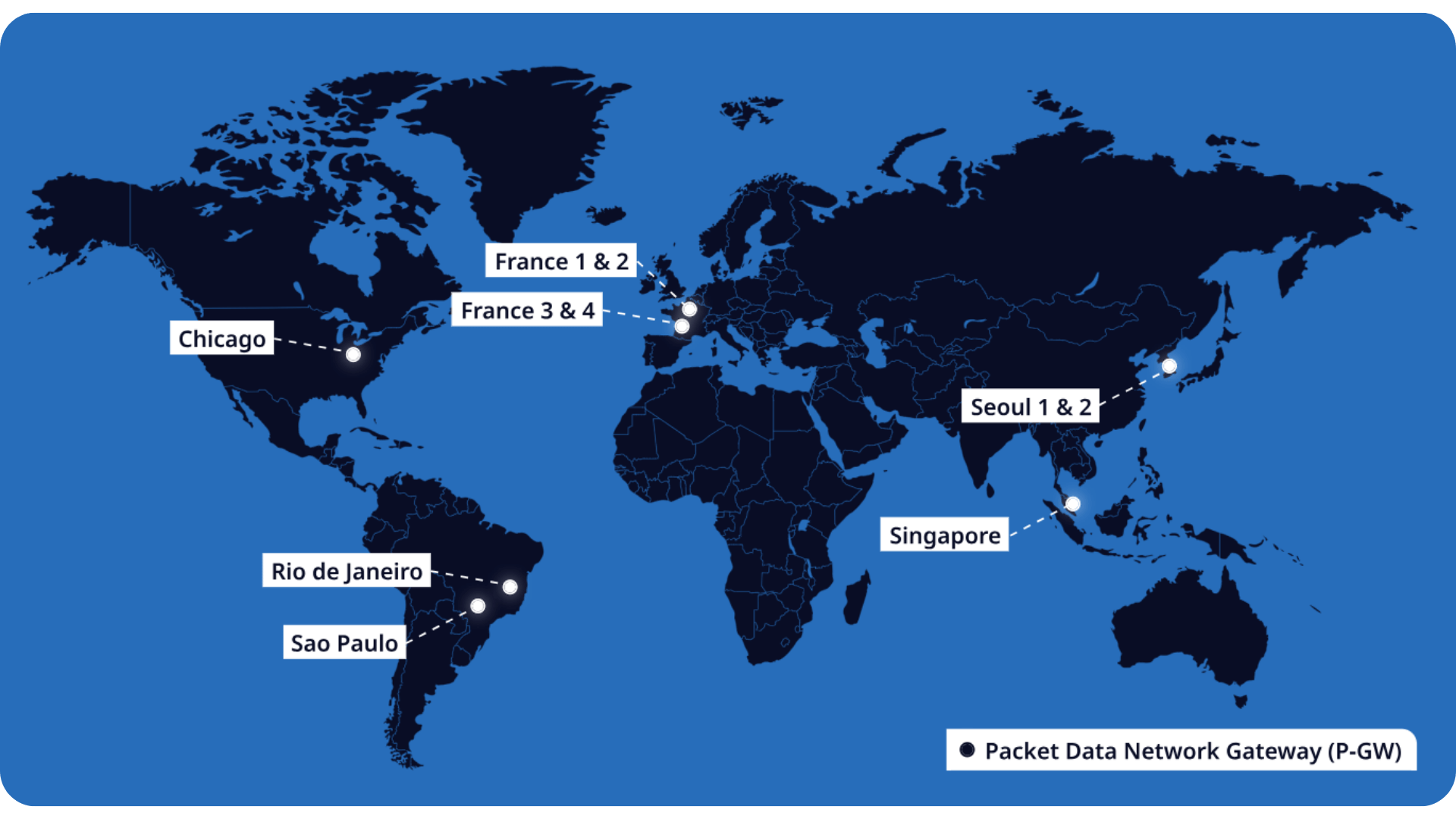
  • Regional network edges

  • Network redundancy​

  • Core infrastructure redundancy

Control

  • Local regulation compliance​

  • NOC & SOC teams​

  • Dedicated network infrastructure

6 Continents.
200+ countries & territories.
One true global coverage.

  • Hundreds of roaming partnerships behind a single eUICC profile
  • Seamless multi-network switch for IoT and M2M eSIM deployments
  • Full regulatory compliance

Tested. Trusted. Tomorrow-ready.

Will your IoT project be our next success story?

QUOTE & ADVICE

Tell us about your
global IoT project

A global connectivity expert will get back to you with a proposal tailored to your volumes, countries, and devices.

🗸 Coverage assessment for your deployment areas
🗸 eSIM and module compatibility check for your IoT or M2M devices
🗸 Transparent pricing, no commitment, decreasing with volume
🗸 Test eSIMs and MFF2 samples to validate before production

FAQs

Frequently asked questions about
Transatel's eSIM for IoT and M2M devices

What is an eSIM for IoT?

An eSIM for IoT is a SIM that stores its operator profile as software on an eUICC chip rather than a physical, swappable card, and can be reprovisioned remotely, over the air. Transatel's eSIM for IoT ships with a multi-operator profile active from day one, then accepts additional local or partner profiles as your deployment expands into new countries.

What is the difference between an IoT eSIM and an M2M eSIM?

The distinction follows GSMA's remote SIM provisioning specifications. An M2M eSIM follows the SGP.01/SGP.02 M2M model, typically used for industrial and machine-to-machine devices. An IoT eSIM follows the newer SGP.31/SGP.32 IoT model, designed for constrained, headless devices with no screen or card slot. Transatel's eSIM supports both models on the same connectivity, alongside the SGP.21/SGP.22 consumer model.

Does Transatel's eSIM support both IoT and M2M deployments?

Yes. Transatel's eSIM supports the M2M model (SGP.01/SGP.02), the consumer model (SGP.21/SGP.22) and the IoT model (SGP.31/SGP.32) on a single secure element, available as a standard eUICC SIM card or an industrial MFF2 eSIM chip built for the 10 to 15 year service life of industrial deployments.

Can an M2M eSIM be reprovisioned remotely after deployment?

Yes. Because Transatel's M2M eSIM carries eUICC, operator profiles are managed remotely over the air, not by physically accessing the SIM. This holds even for the industrial MFF2 eSIM, which is soldered directly to the device's circuit board: soldering fixes the hardware in place for the device's lifetime, but the network and operator can still be changed remotely.

How do I get an eSIM for my IoT or M2M devices?

Fill in the project form on this page with your device volumes, target countries and requirements. A global connectivity expert will respond with a coverage assessment, an eSIM and module compatibility check, and transparent pricing that decreases with volume, with no commitment required.